


Introduction
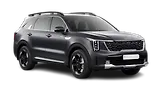
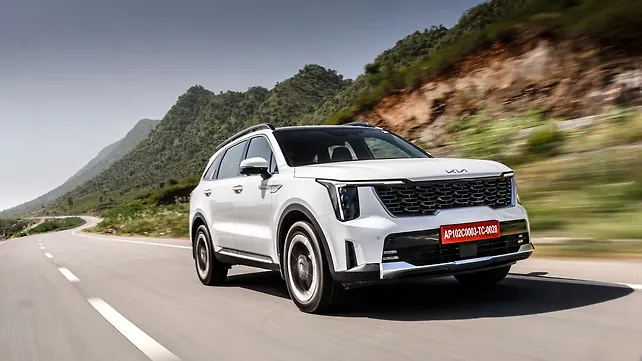
The Kia Sorento fills a gap. A gap that exists between cars like the Mahindra XUV 7XO and the Toyota Fortuner. Yes, you have models like the Kodiaq and the Tayron, but these fail to move the needle on the value scale when moving up from or to the 7XO. The Sorento is here to change that. It is here to both eat into some of the 7XO’s sales and to expand the market of premium three-row SUVs. As for the Fortuner buyer, now that will be a hard nut to crack, even for the Sorento. But attracting the Toyota Hycross buyer? Now that might be easier pickings. And it starts with how the Sorento looks.
Exterior
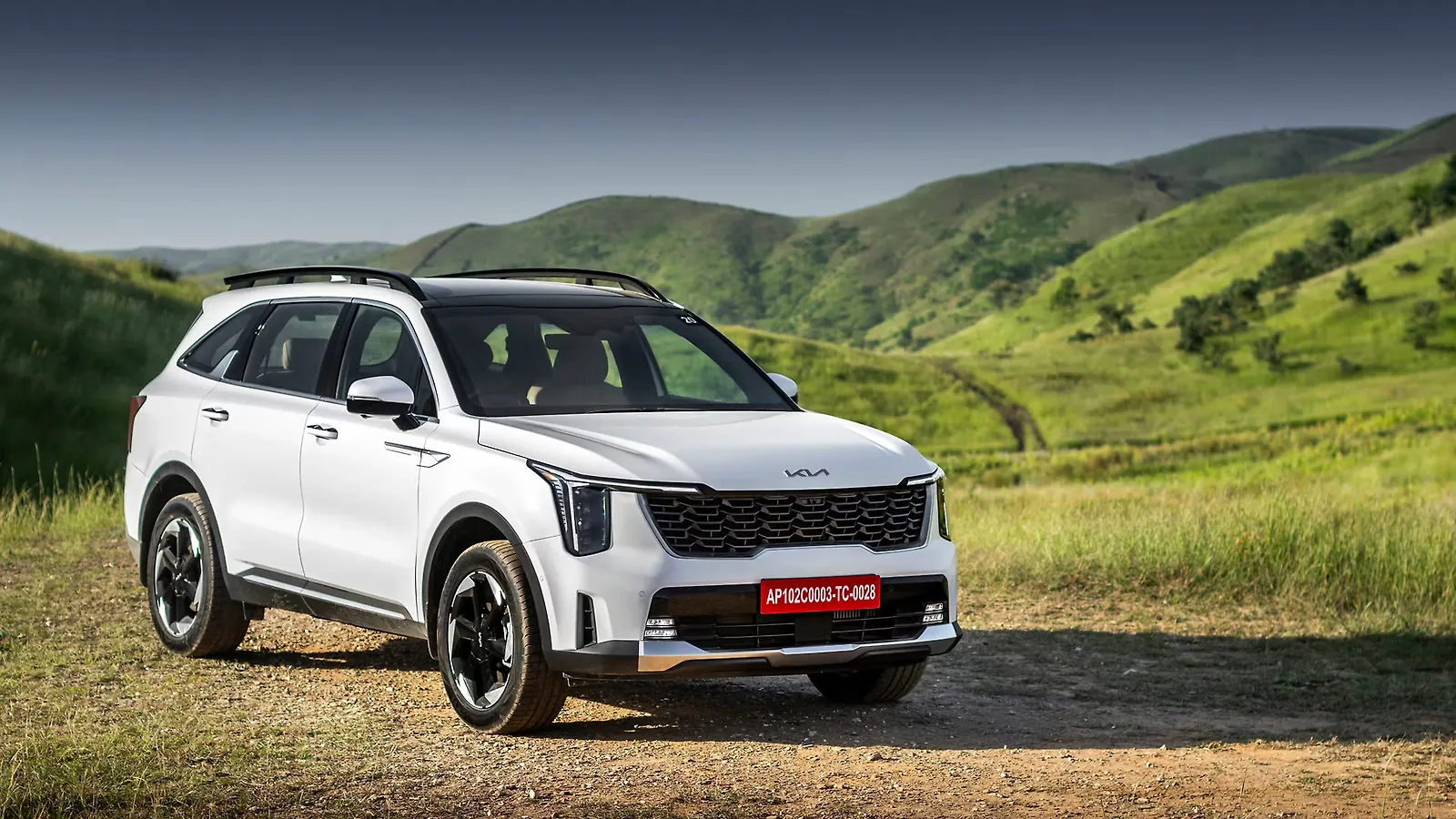
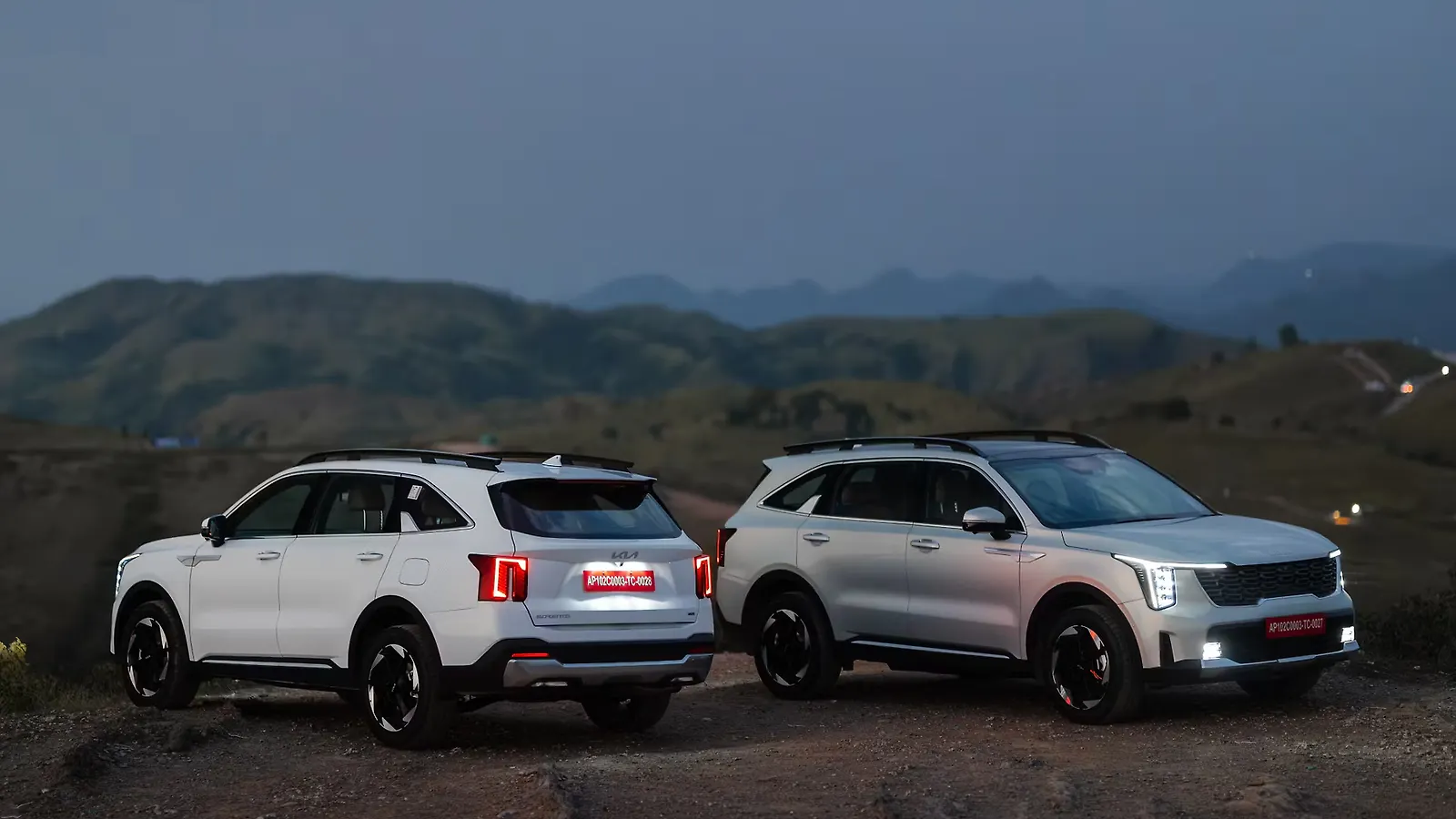
The Sorento trumps all its competition mentioned here on size. It is longer, sports a longer wheelbase and is wider too. Yes, even compared to the Fortuner. And that size comes across quite clearly in the real world. The Sorento has the road presence of a full-sized SUV. It might not look as butch as the Toyota, but if it is an imposing-looking car you want, the Kia beats the rest on that front.
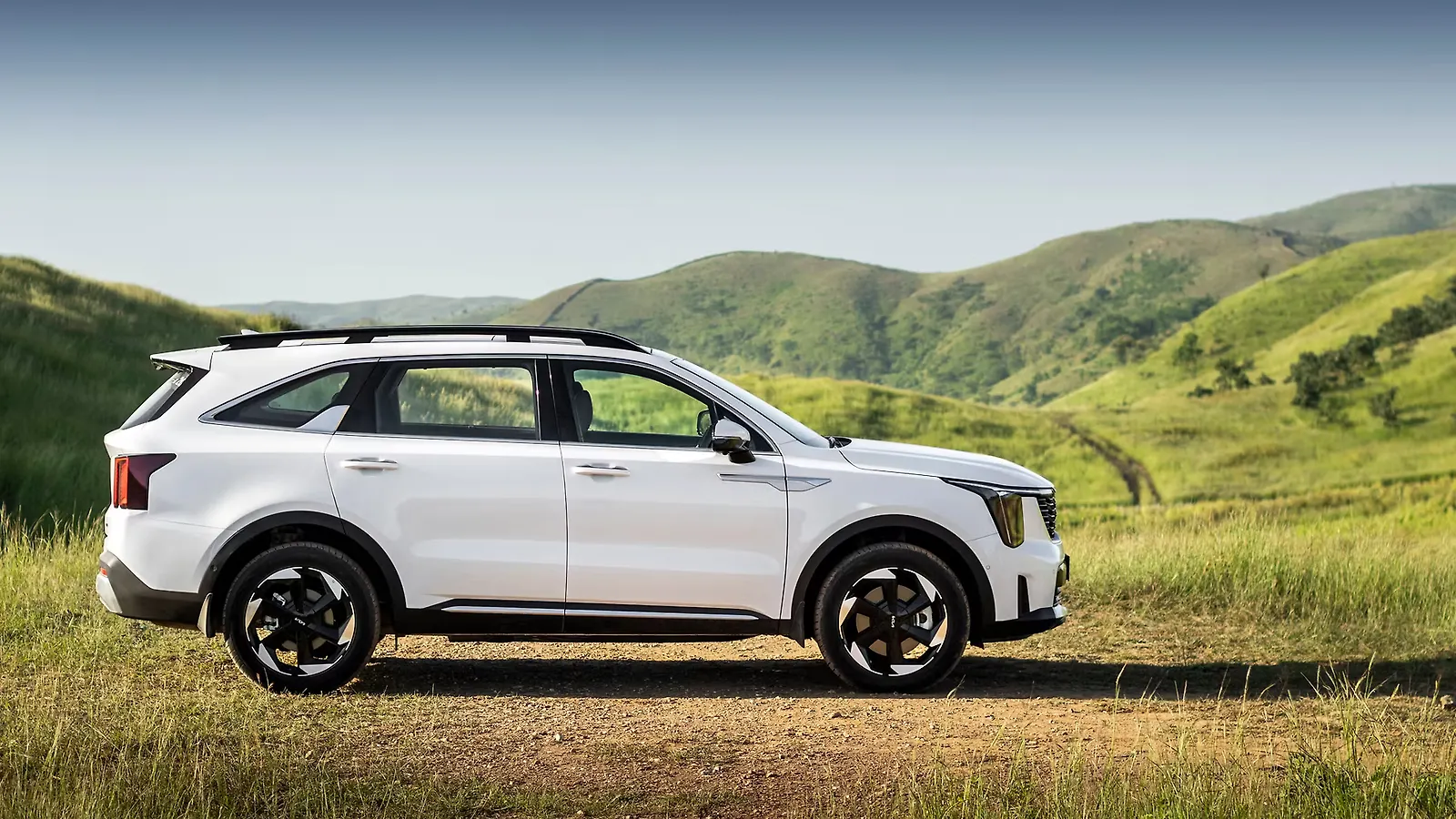
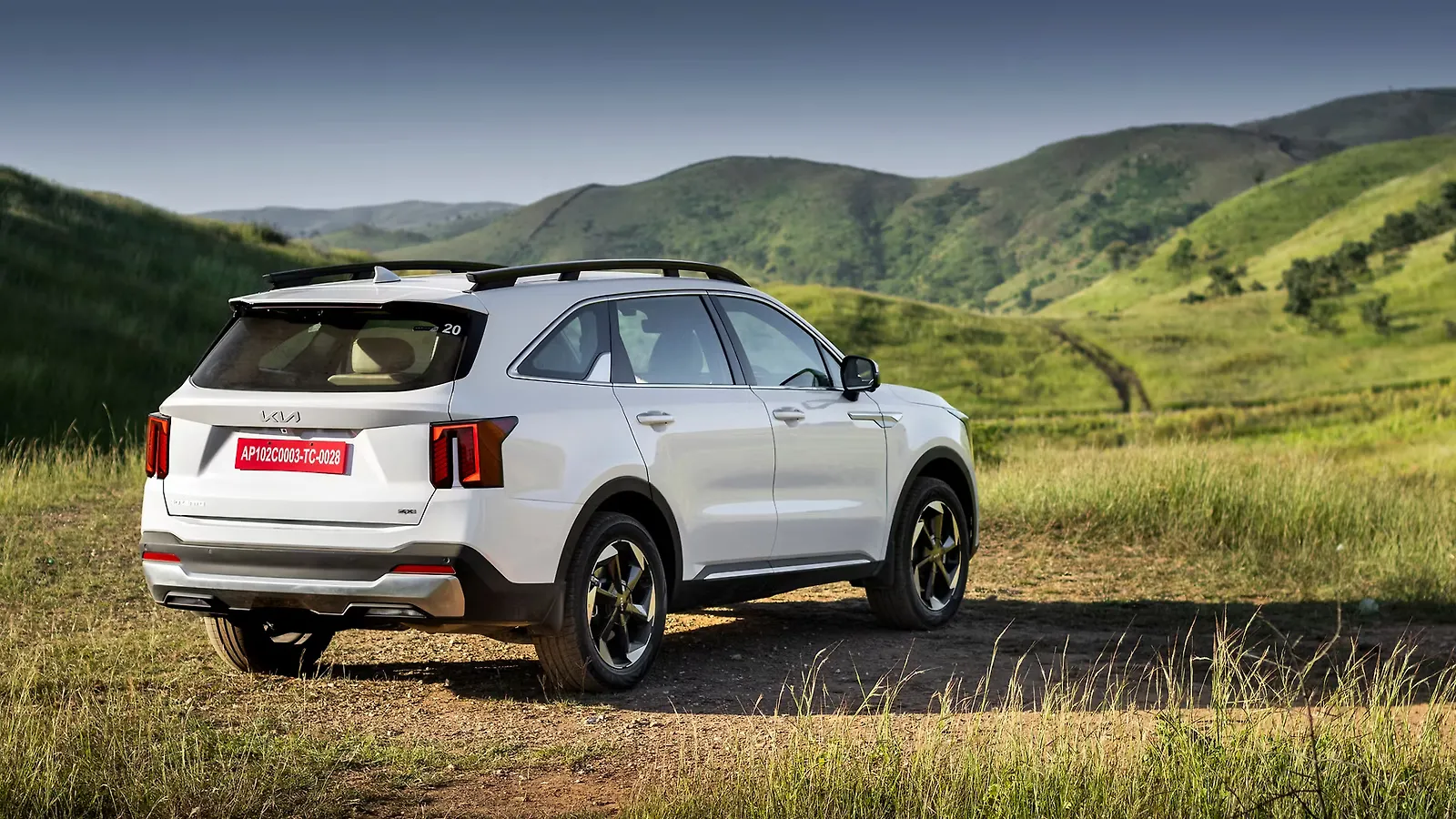
The only downside is that it looks a little old in the tooth compared to Kia’s latest launches, particularly the new Seltos. The Sorento still seems to follow the original Seltos and Sonet design language. And though it’s not exactly an old-looking car, it’s not particularly modern-looking either. Much like the Fortuner, if you will.
Interior
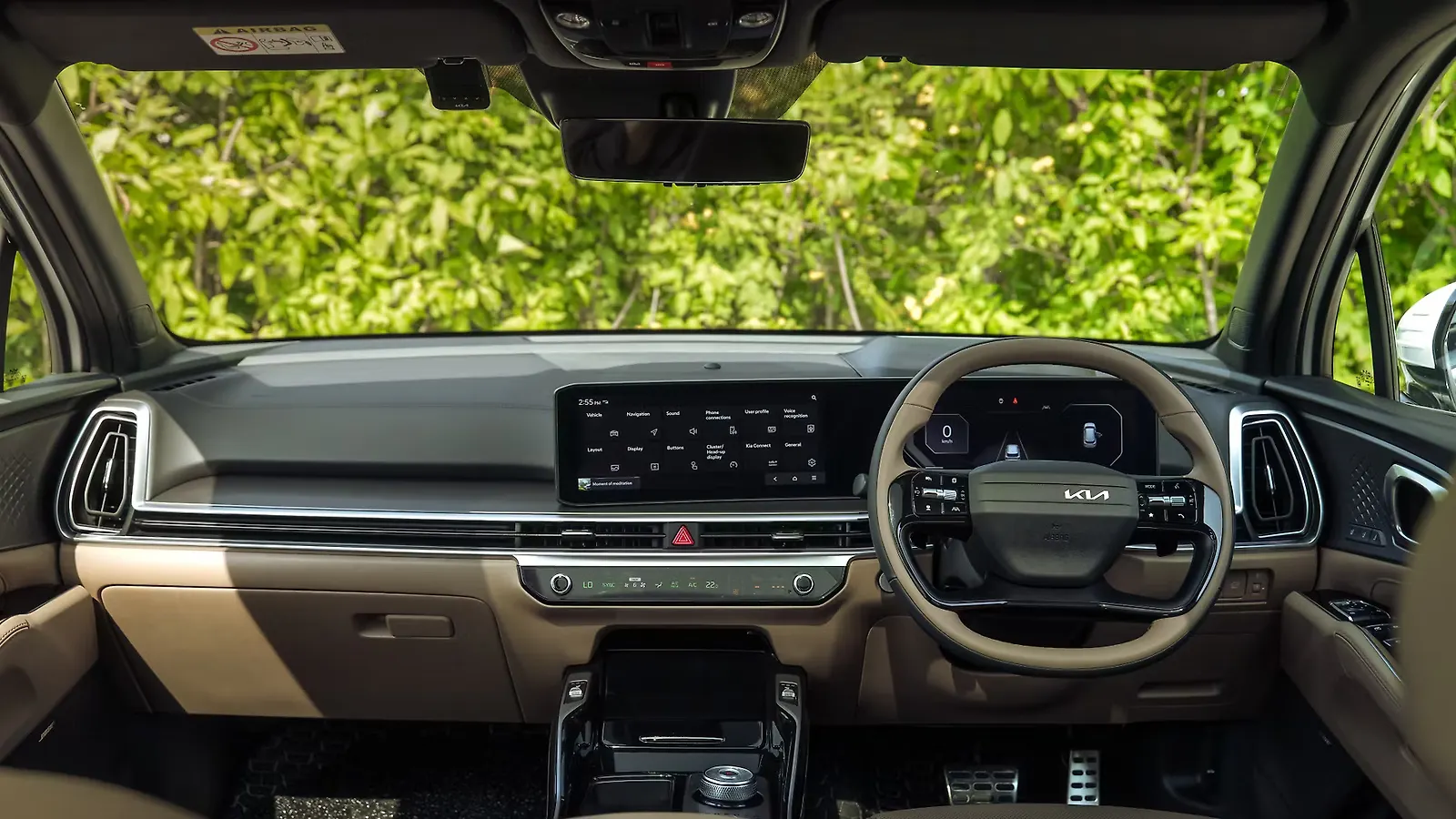
Inside too, it can’t match the new Seltos for modernity. But, the Sorento’s interior feels warmer, more welcoming. It’s almost like coming home instead of stepping into your all-glass-and-steel office, which is what the new Seltos and even the 7XO’s interiors feel like.
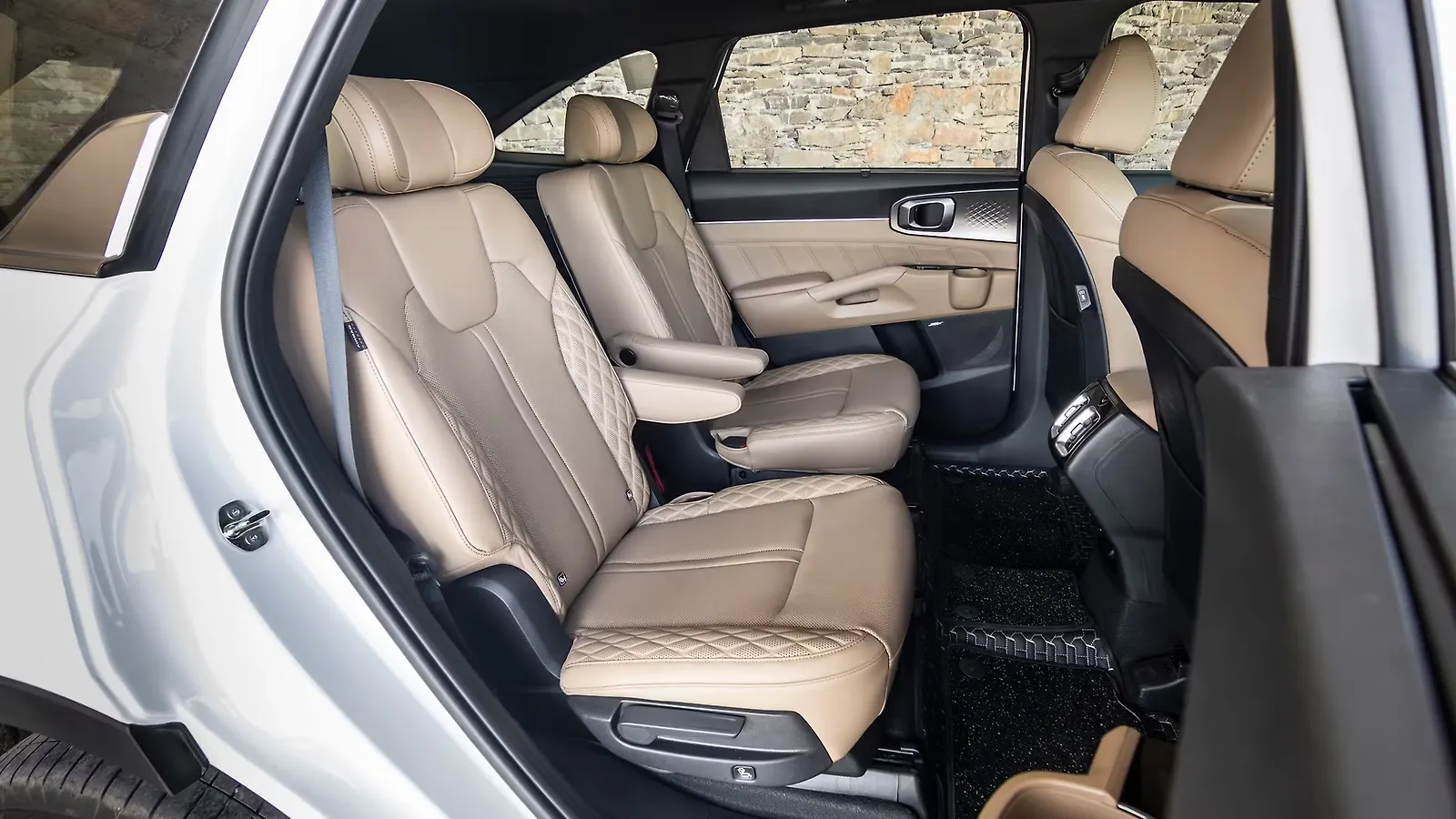
Space-wise, there’s enough and more room for all passengers; yes, even those in the last row. The size of the car plays its part. There’s enough and more leg, shoulder, and headroom all around. There’s decent glass area all round too, which makes the Sorento feel roomy as well. The seats — especially in the first and second rows — are large, accommodating, comfortable, and adjustable in many ways, which makes for very comfortable seating indeed.
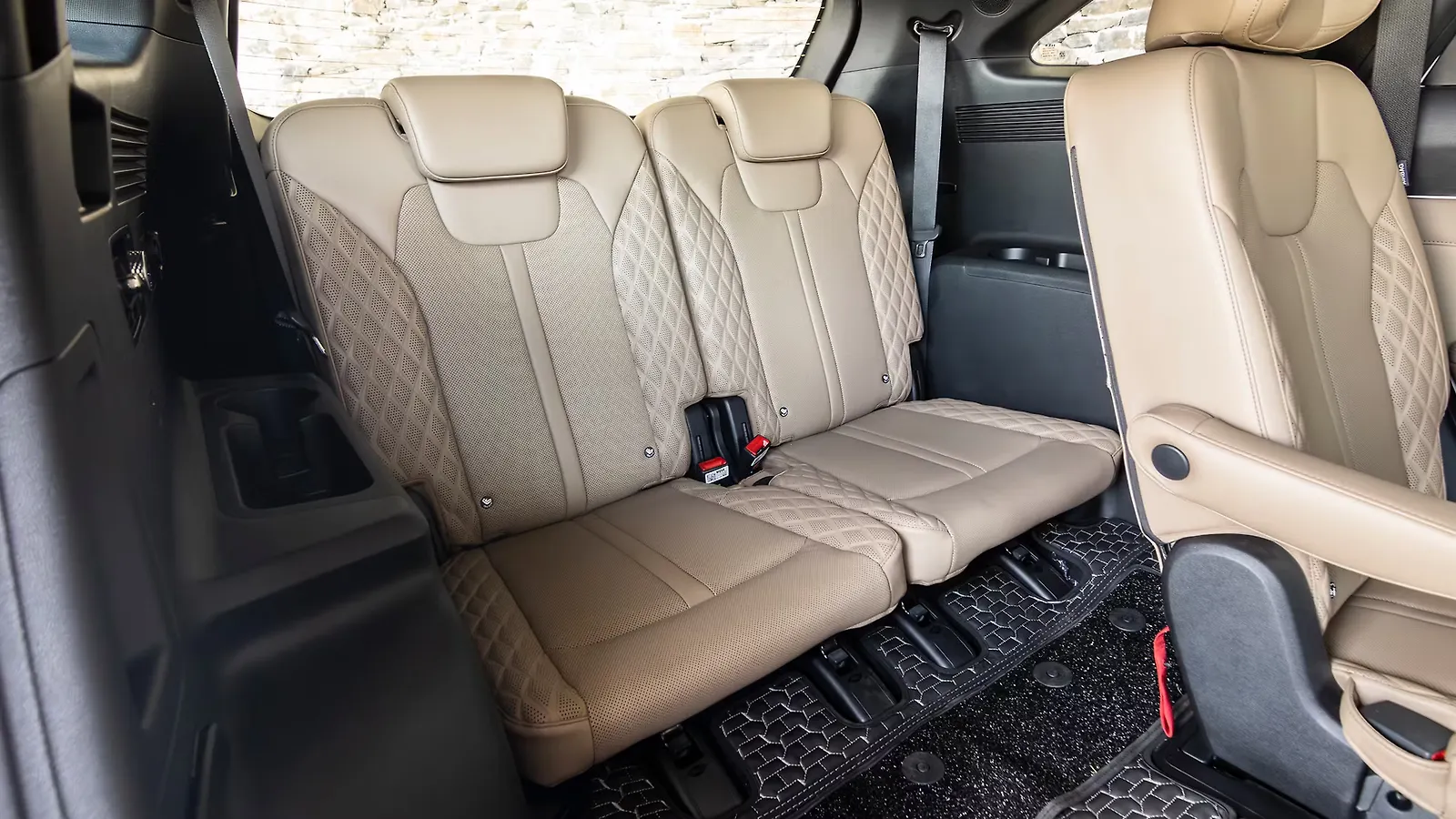
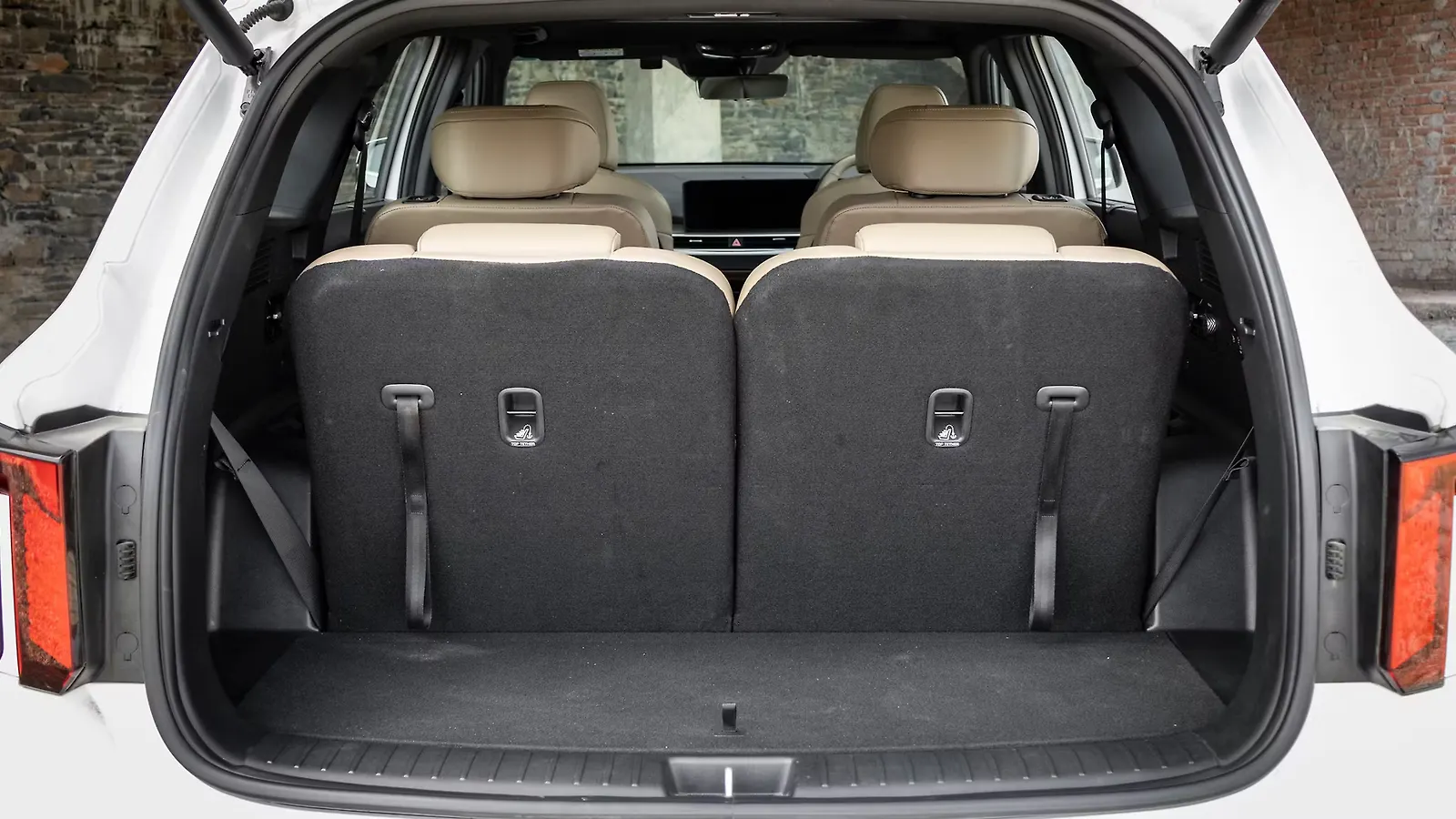
This is where we found the last row wanting. First, it is a task to get in and out of the last row because its second-row seats don’t get a tumble function like in the Carens. Then, once seated, even though there’s good shoulder, head, and knee room, the seats are on the floor. That means no thigh support to speak of. Plus, the seatback doesn’t recline. This limits flexibility and could be an issue over long drives. You do get dedicated air-con vents, cup holders, and storage spaces for the last row of passengers. And even with all three rows in place, the boot space is still good.
The Sorento is also quite loaded when it comes to features. We have the top-spec HTX with the ADAS pack here. The ADAS pack includes Level 2 features like front collision avoidance in various forms and shapes. There is also lane departure warning, lane-keep assist, high-beam assist, and 25 other ADAS-related features.
HTX also features a 12.3-inch display, a panoramic sunroof, HUD, digital inside rear-view mirror, and driver-side electrically adjustable seat with memory and ventilation. In fact, you get ventilation for both front and rear seats. The Sorento also comes with front and rear dashcams, remote parking assist, a 360-degree camera, power-operated boot opening and closing, and an AI assistant powered by Perplexity. The latter wasn’t very keen to respond to our requests.
Powertrain and Performance
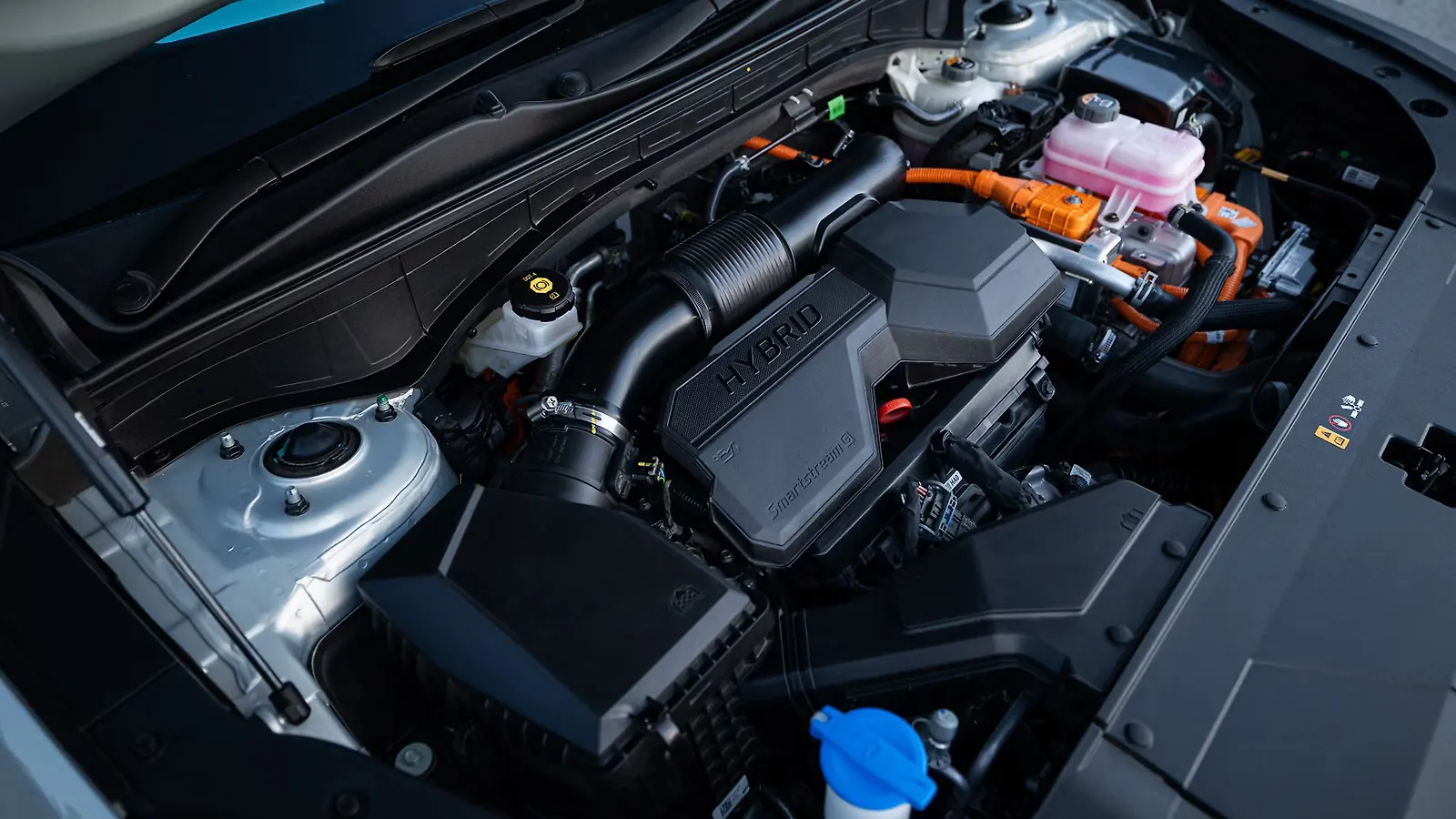
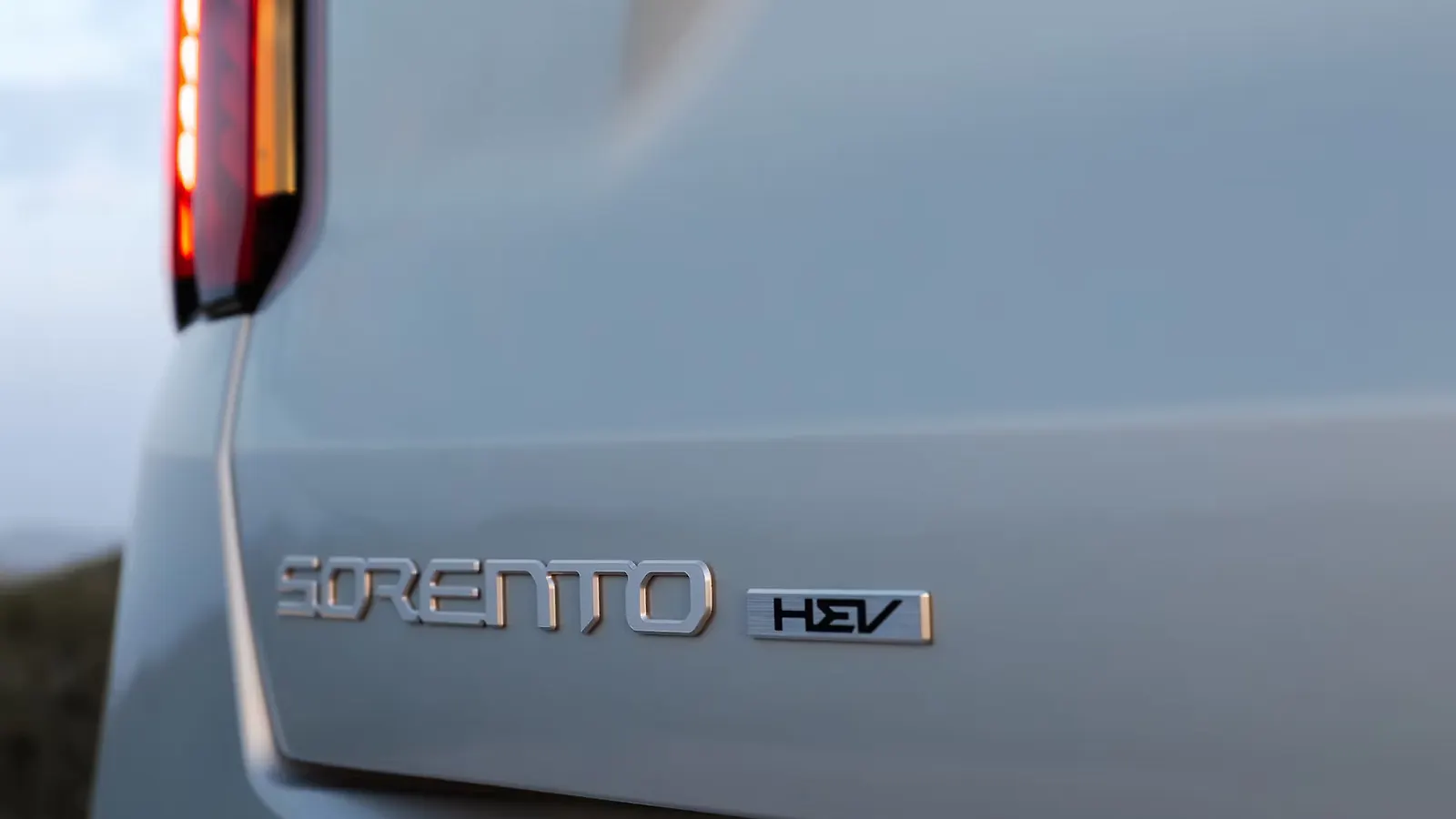
We drove the petrol hybrid. But, one can also pick a diesel engine with the Sorento. Both, however, are mated to automatic gearboxes. There are no manuals on offer. Torque-wise, the diesel is a monster with over 440Nm, while the hybrid’s system output — ICE and EV combined but tweaked — makes 350Nm. Both the diesel and the hybrid can be had as front- or all-wheel drive.
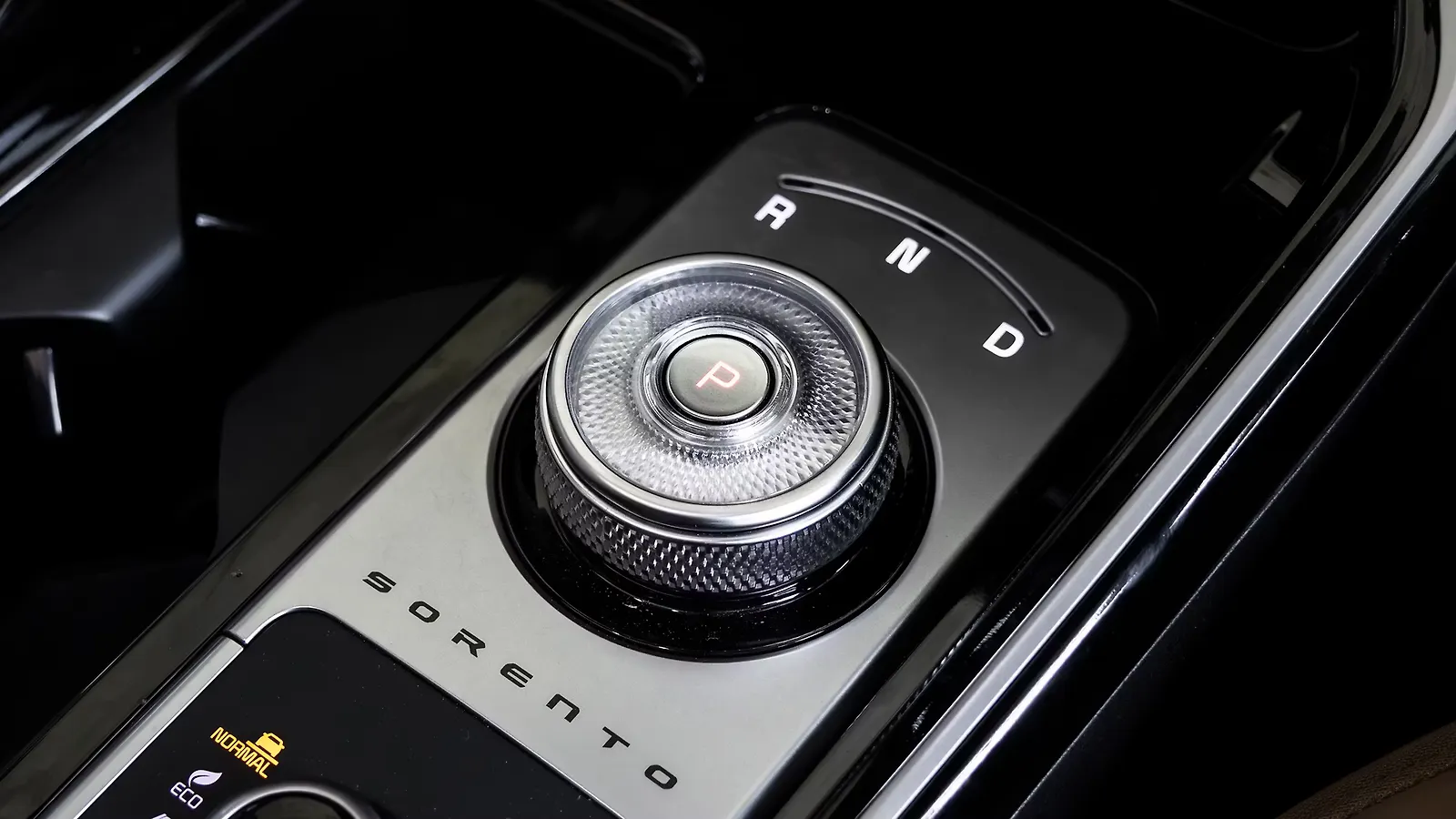
The Sorento isn’t like other hybrids on sale in the country. Unlike Toyota and Honda, which use an e-CVT, the Kia uses a traditional six-speed automatic to drive its wheels. The electric motor sits between the engine and the gearbox. So, no matter if the power is coming from the engine or the motor, the wheels are always driven via the gearbox. This means whether you drive the Sorento with a light foot or a lead one, it behaves like a traditional car, with the revs rising and then dropping with every upshift. An e-CVT-equipped car, much like a mechanical CVT, keeps the engine rpm constant under full-bore acceleration while the wheels’ speed goes up. And that’s what causes what many call the rubber-band effect.
On the road, the hybrid works seamlessly. The EV-to-ICE and ICE-to-EV transitions can’t be felt when you are driving peacefully. The engine remains fairly quiet and refined at low revs. It’s only when you ask more of the car that you can hear the engine. Now, this four-cylinder 1.6-litre turbo isn’t the most refined engine in the mid and high revs. As a result, under full-bore acceleration, while overtaking, for instance, it doesn’t sound great. One can also feel the vibrations in the pedals and the floor with rising engine rpm. The vibrations aren’t high or bothersome. But the contrast from almost-silent and vibration-free motoring at low revs does make you notice.
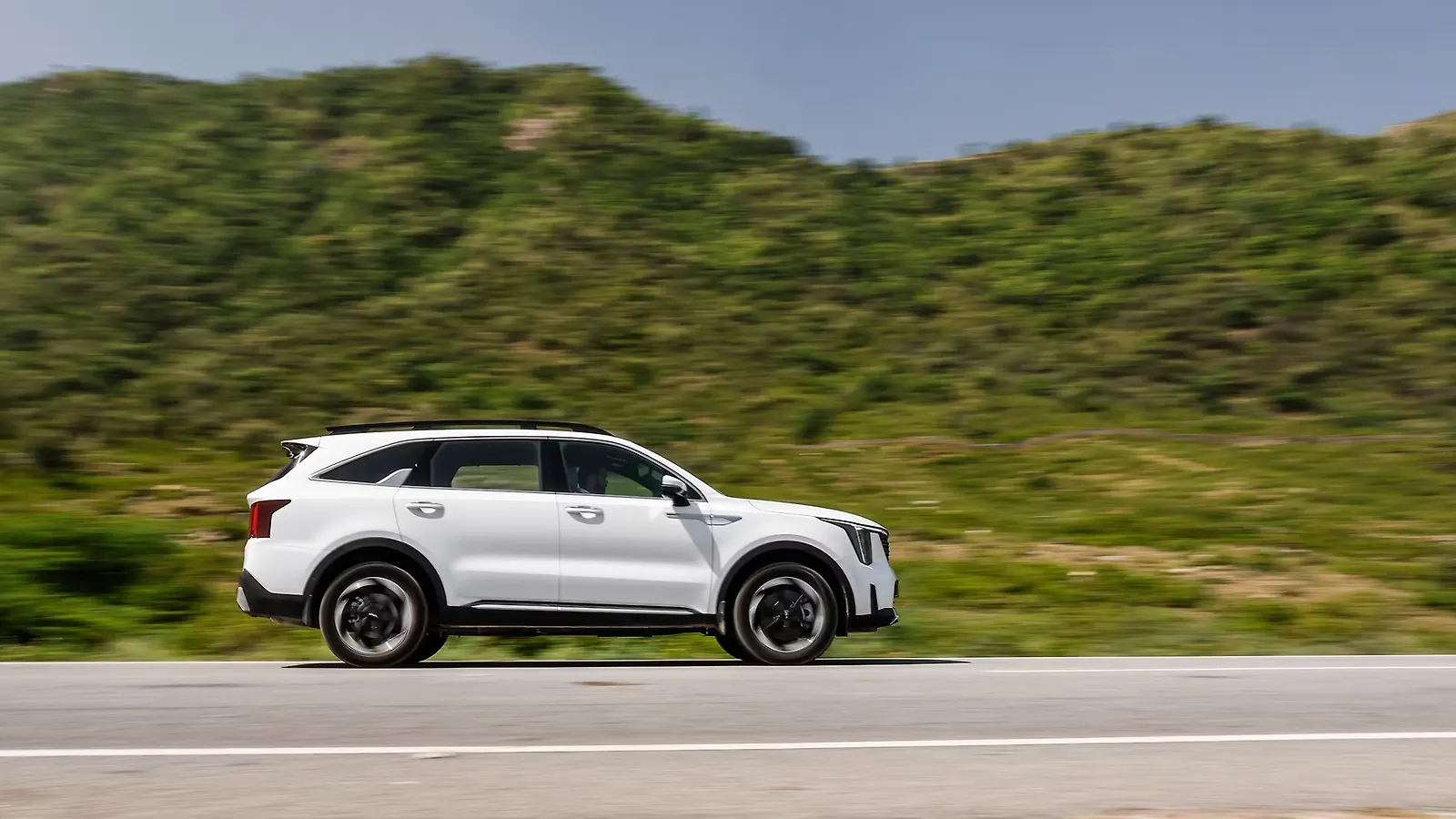
Talking about acceleration, the Sorento doesn’t feel like a near two-tonne car. The powertrain gives it enough zip to mask its weight really well. Be it standing-start acceleration or kickdown through the gears, the response from the powertrain is instant. So much so that if you aren’t paying attention, the 120kmph beep begins to sound within metres of taking off. So, it might be big and heavy, but it still feels quite light on its feet.
Ride and Handling
This feeling of lightness remains even when driving within city confines. For starters, the steering on the Sorento is well configured. It is light at slow speeds, has a good rate of return, and damps unnecessary road inputs quite well. It’s also quite quick. The Sorento has a relatively tight turning circle as well. And then add the good visibility — over the hood, via the A-pillars, and through the ORVMs — and you have a car that’s surprisingly easy to drive despite its size.
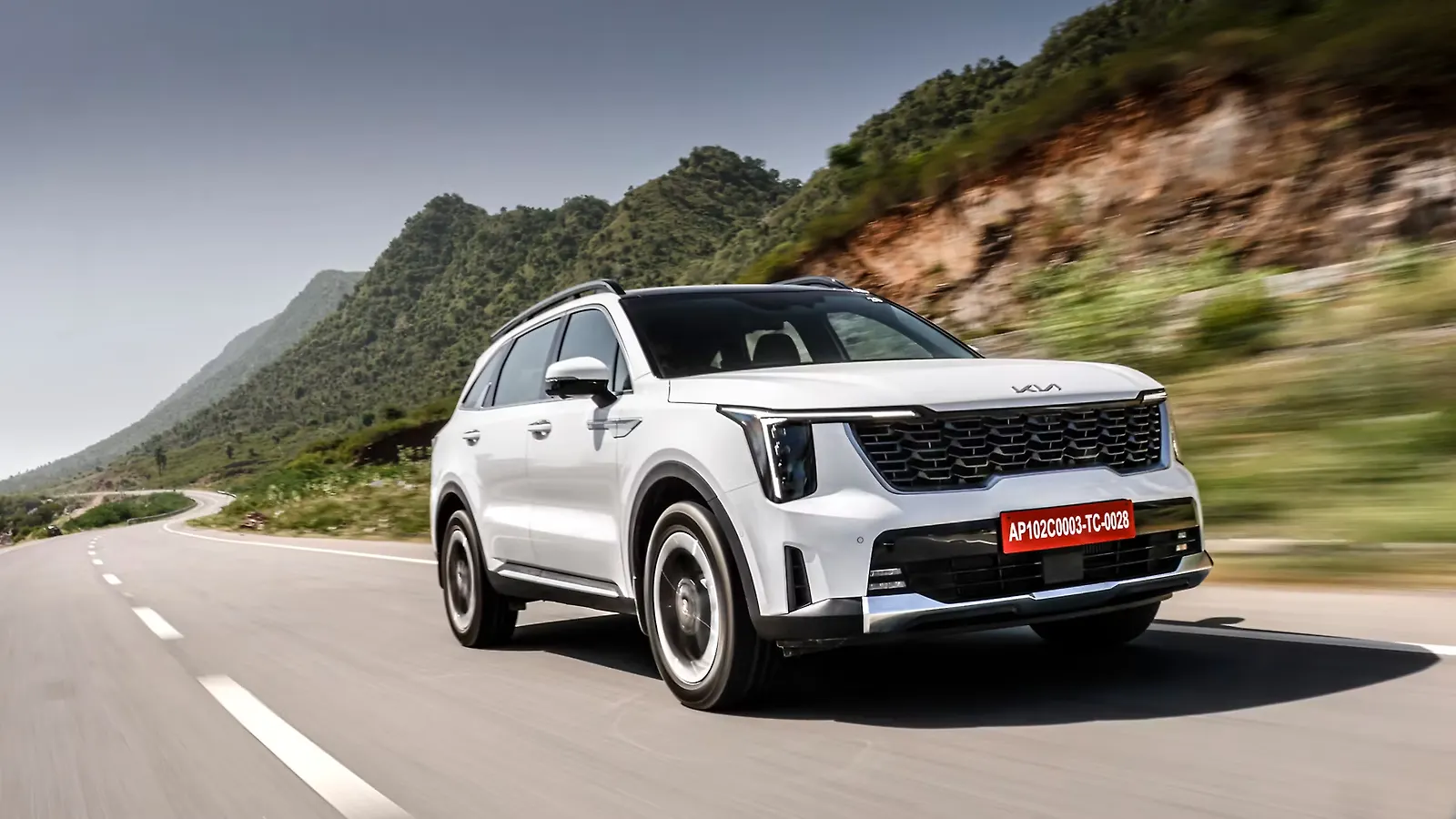
It’s likeable on the highway too. The steering weighs up nicely at speed. It doesn’t have great feel or feedback, but it has that reassuring feel of solidity, which is what you need when driving around the speed limit on our new but bumpy highways and expressways. The underpinnings lend the same solidity to the SUV when doing high speeds. The HTX here runs on 19-inch wheels, comes with disc brakes all around, and is suspended on MacPherson struts up front and a multilink setup at the rear. The Sorento never felt nervous, flighty, rolly-polly, or unstable no matter what we threw at it. It does feel like a big, premium car in that matter.
The ride, meanwhile, is plush and well damped for the most part. It handles undulations, road joints, rumblers, and poorly resurfaced sections of the road at speed very well. The passengers don’t feel much of what’s underneath. This holds true at slower speeds too. There is no exaggerated side-to-side movement when going over bad roads with potholes aplenty. It doesn’t roll or pitch excessively either. It is only the stepped or square-edged bumps and potholes that get the better of it. The Sorento doesn’t iron them out as well. You can both hear and feel them. And though it doesn’t crash into these bumps or potholes, it does lose some of its otherwise well-composed, refined, and well-settled demeanour when traversing over them.
Verdict
If you are looking for a three-row family car that is capable of handling daily city commutes and quarterly family trips, there are three solid options — the Mahindra XUV 7XO diesel, the Toyota Hycross hybrid, and the Sorento hybrid. Out of the three, the XUV is the most affordable, but it also has the worst last-row seating, and, being diesel, it doesn’t future-proof you as well as the other two.
The Hycross has the best last-row experience, be it comfort or space. But, it lacks on two crucial fronts — it doesn’t ride as well as the other two and the quality and finish levels for its price are close to dismal. It’s also not as nice to drive as the other two. Pricing-wise, it sits right in the middle.
That leaves us with the Sorento. It is the most expensive car here. And it doesn’t deliver a great third-row seating experience. It is, however, nice to drive, comfortable, and well-equipped. It is also the most composed and dynamically capable car in this trio. Plus, we’d pick its powertrain over the other two six ways to Sunday.
Bottom line is, the Sorento might not be as brilliant a value proposition as the XUV. But, if you can afford the Sorento, we’d recommend going for it because it just delivers a better experience overall.